In modern diplomatic activities, the value of a gift lies not in its expense, but in its ability to tell a story about culture, people, and national identity. This is also why more and more traditional handicrafts are being chosen for diplomatic events. heritage diplomacy, becoming a cultural bridge between Vietnam and international friends.
At the Japan-Hung Yen Trade Fair, Hanhsilk was honored to receive a prize for its artwork. Silk scarf embroidered with lotus flowers To Mr. ITO Naoki – Ambassador Extraordinary and Plenipotentiary of Japan to Vietnam.
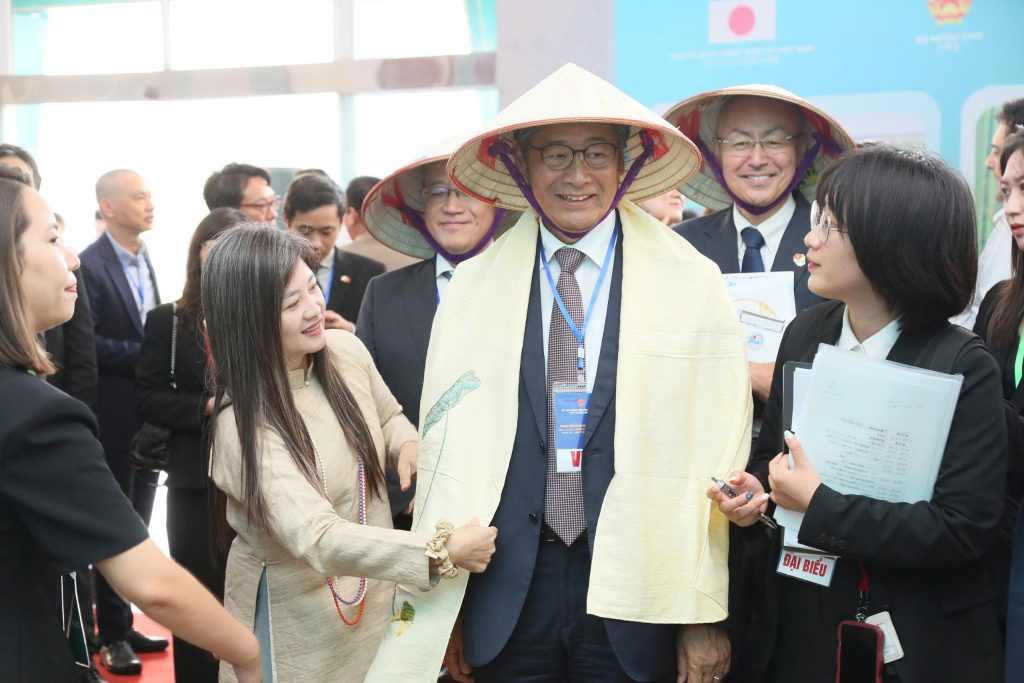
A small gift, but it carries a big story about traditional crafts, people, and the spirit of Vietnamese craftsmanship.
Heritage diplomacy It is a way of using cultural values, traditional crafts, arts, and national traditions to build understanding, respect, and connection between countries.
Unlike purely symbolic gifts, gifts in heritage diplomacy often contain:
👉 See more: What is a national gift? What are the criteria for a "representative" gift?
Among the many Vietnamese handicrafts, silk scarf embroidered with lotus flowers It possesses many unique qualities.
The scarf is made from Nam Cao silk – a traditional craft village with a history of over 400 years.
From the mulberry growing region to the spinning, weaving, and finishing processes, each product bears the mark of generations of artisans.
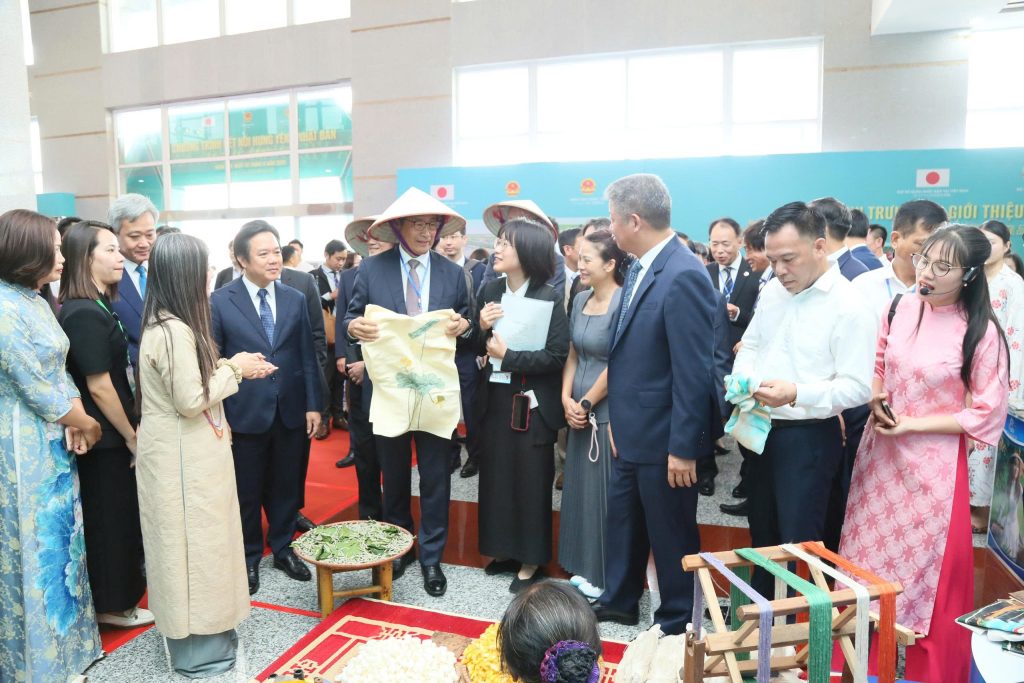
👉 See more: Nam Cao raw silk – A 400-year legacy of Vietnamese silk.
While cherry blossoms are associated with Japan, the lotus flower has long been a symbol of Vietnam.
The lotus flower represents:
On a soft silk background, each stitch of the artisan has recreated the image of the Vietnamese lotus flower using traditional hand embroidery techniques.
The Japanese are known for their appreciation of:
These are also the values that Hanhsilk has pursued throughout its journey of preserving and developing the Nam Cao silk weaving village.
A silk scarf is more than just a fashion accessory.
It also includes:
It is this similarity that has created a natural connection between the two cultures.
Many people believe that traditional craft products are only suitable for tourism or souvenirs.
But in reality, products with profound cultural value can absolutely become:
Because what is being given away is not just a product, but the story of Vietnam.
Over the years, Hanhsilk has pursued the following development direction:
Each silk scarf is more than just a fashion item.
It's a combination of:
👉 See more: Vietnamese traditional craft village heritage: why is "living preservation" necessary?
Often, heritage diplomacy begins with very small things:
When an ambassador holds a silk scarf embroidered with lotus flowers in their hands, it's more than just a formality of giving.
It was also a moment when a part of the essence of Vietnamese traditional crafts was introduced to the world.
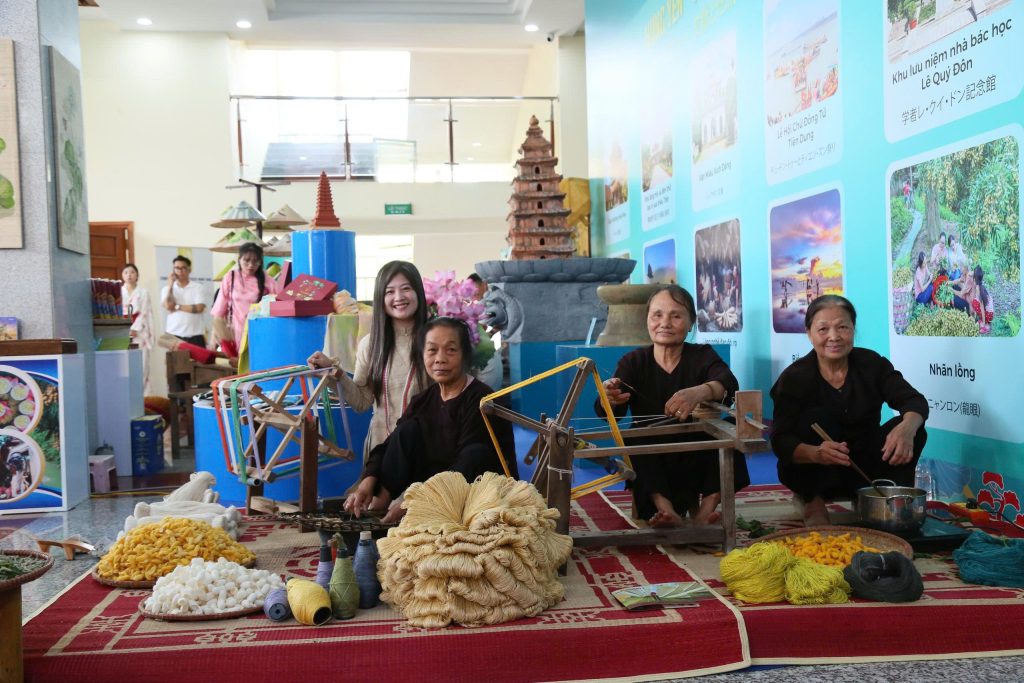
Story heritage diplomacy It's not just about diplomatic events. It's about how we preserve, cherish, and showcase our cultural values to the international community.
The silk scarf embroidered with lotus flowers This gift, presented to Mr. ITO Naoki, is not simply a present. It is a greeting from a Vietnamese craft village over 400 years old. It is a meeting of two cultures that both cherish the value of craftsmanship, sophistication, and sustainable development. And it is also a journey for Vietnamese heritage to continue to be told through the language of kindness, craftsmanship, and culture.
It involves using cultural values, traditional crafts, and arts to connect with and promote the national image.
Because it embodies cultural identity, is highly handcrafted, and shows appreciation for the recipient.
The lotus flower symbolizes the nobility, resilience, and pure beauty of the Vietnamese people.


 English
  Vietnamese