One of the most frequently asked questions Hanhsilk receives from customers is, "Is this a scarf?" genuine silk "No?" This is understandable because nowadays, the word "silk" is very commonly used in the market. Many products are called silk scarves but are actually made from completely different materials.
Some products are made from natural silk, some from synthetic fibers, and others are blends of various fibers. Therefore, understanding the materials is essential before making a purchase.
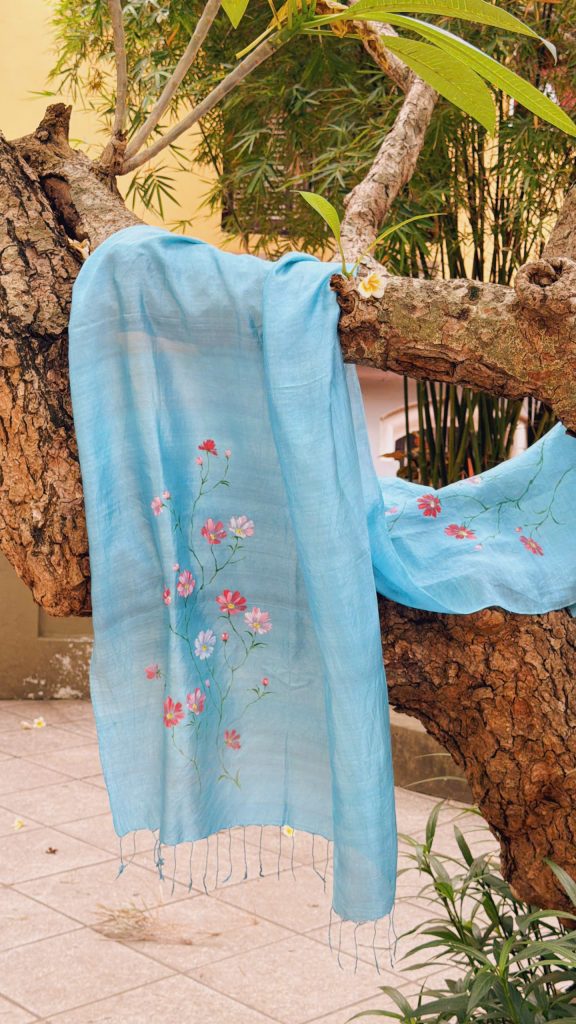
The word "silk" has long been a familiar concept. Buyers often tend to think: If it says "silk," it means silkworm silk. However, this is a fairly common misunderstanding. In reality, the word "silk" sometimes only describes the soft feel or the glossy surface of the product.
It doesn't mean the product is made from natural silk.
Made from silkworm silk fibers. Characteristics:
This is the most common type on the market. Features:
However, this is not silk.
It is a combination of:
Advantage:
It is manufactured to feel like natural silk. However, it is not pure silk.
No. The selling price is not the only factor to consider. Buyers need to look at the following as well:
Silk is not overly shiny.
When the viewing angle changes, the colors will shift slightly depending on the light.
Silk has the following feel:
But it's not as slippery as plastic.
The silk threads create soft, flowing folds.
Silk doesn't feel stuffy.
Hanhsilk always prioritizes product transparency. Each line of scarves is clearly described:

Because what matters is not how you name the product, but helping customers understand the true value of the choice they are making.
Not every scarf labeled "silk" is actually made of pure silk. Understanding the material will help buyers make a more informed decision.
Sometimes, what matters isn't how a product is advertised, but rather its transparency regarding its origin and true value.
Please check the ingredients, product origin, and information from the manufacturer.
No. Satin is a type of weave, not the name of a type of yarn.
Because of its soft and glossy surface, similar to silk, consumers can easily mistake it for silk.


 English
  Vietnamese