The production of raw silk involves numerous steps, from mulberry cultivation and silkworm rearing to yarn boiling, spinning, and weaving, to creating the finished product. Therefore, genuine raw silk is not cheap. To avoid buying fake silk at high prices, this article will share 7 ways to distinguish between real and fake raw silk, helping you choose quality products and avoid counterfeits.
Genuine silk fabric will not be as cheap as counterfeit or Chinese-made fabrics. Genuine silk fabric, by width, costs between 150,000 and 200,000 VND per square meter. Thicker silk fabrics can cost up to 600,000 VND per square meter.
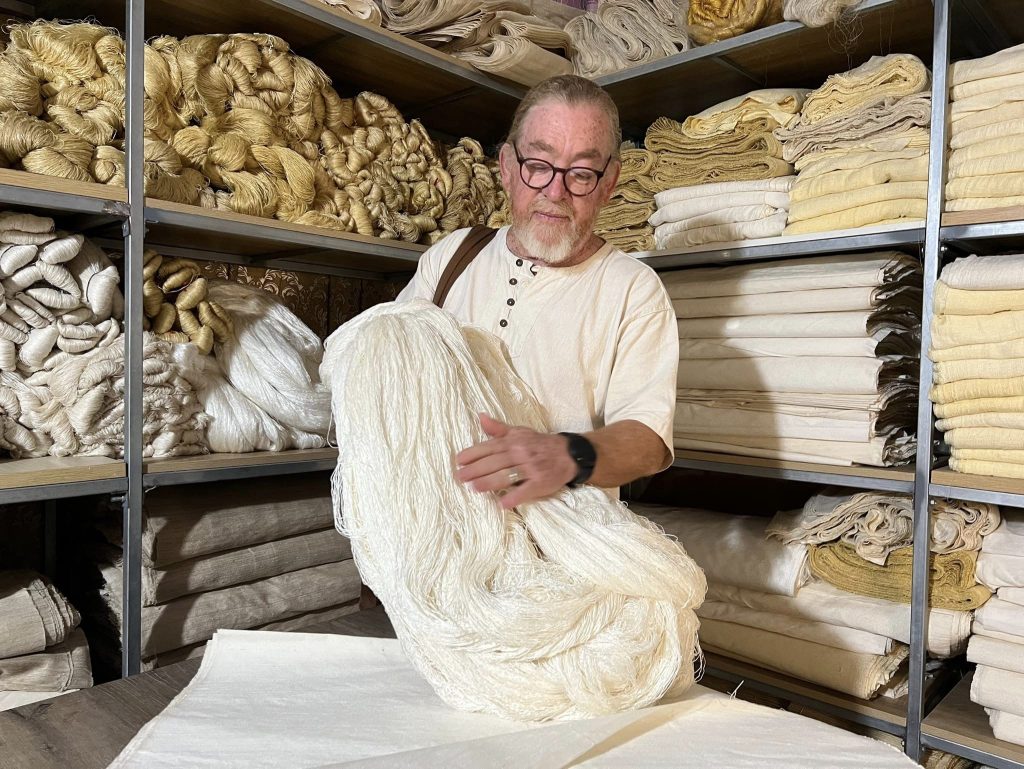
2. Look with your eyes.
Visually, genuine hand-woven silk may have a mix of long and short threads. Additionally, genuine silk fabric has an uneven sheen depending on the light. Compared to fake silk, the difference in sheen might not be noticeable indoors or outdoors, in brightly lit or dimly lit rooms. However, genuine silk will be very shiny under high light, while under low light it will not reflect light, resulting in a duller, less lustrous appearance. This is why many people find fake silk more visually appealing in terms of color and pattern.
3. Feel the fabric surface.
Touching the surface of real silk fabric, you can feel that real silk has a certain warmth, softness, and roughness, compared to fake silk which is usually colder and smoother. Distinguishing real and fake silk by touch is often inaccurate, so other methods should be used instead.
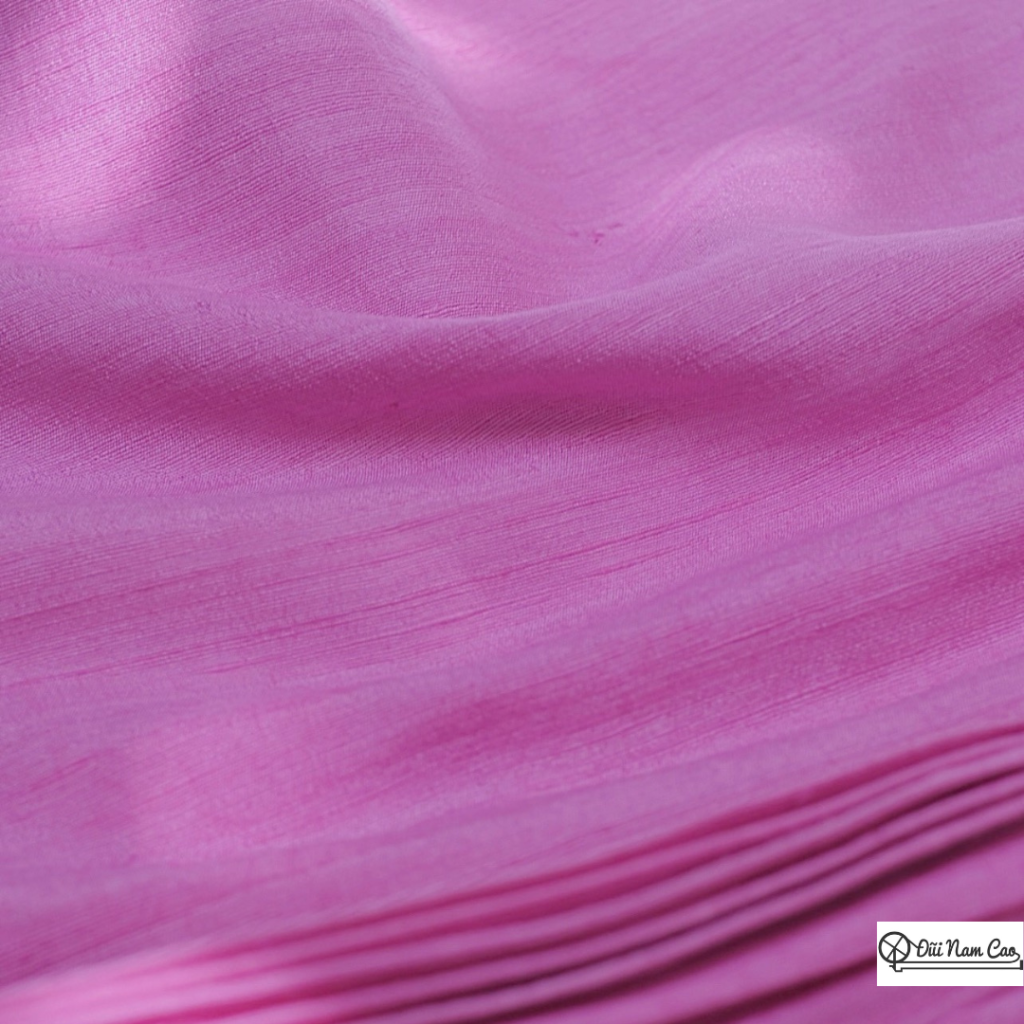
4. Distinguishing real silk with a ring.
A thin silk scarf can easily pass through a ring, while fake silk will get stuck in the ring. To test this, you should choose a small, long, thin scarf; this method should not be used with large, thin silk scarves or pieces of fabric.
5. Heat or burn the raw silk fabric.
This method should only be used if you have some leftover fabric from cutting; you can test it by burning a small amount. Real silk burns like organic matter, turning to ash and not curling. Fake silk usually smells like synthetic plastic, burns with curling and clumping. This is a relatively accurate method to distinguish between real and fake silk.
6. Use of chemicals:
This method of distinguishing real from fake raw silk is not recommended unless you have leftover fabric, and the mixing process is not suitable for non-experts. It is usually only used when the product is taken to the Product Standards and Quality Control Department for testing. According to the test results, real raw silk will dissolve in the solution, while fake or blended raw silk will not.
7. Ask the salesperson directly.
When visiting a silk fabric shop, you might find many openly selling blended silk in a 1:3 ratio (1 TP 3 T) rather than pure silk. Therefore, besides the methods above, you can ask, "Show me a 100% pure silk, 1 TP 3 T" or "80% pure silk, 1 TP 3 T" fabric to buy what you want. Because pure silk is expensive and difficult to machine-sewn and pattern, not all customers prefer it, so it's inevitable that many shops sell blended silk.
Above are 7 ways Hạnh Silk suggests you can distinguish between real and fake raw silk. At Hạnh Silk showroom, the raw silk used comes from the Nam Cao Raw Silk Craft Village Cooperative and is handcrafted by artisans from the village, so 100% is genuine raw silk. The showroom always welcomes customers to visit and experience the raw silk and the traditional beauty of the Nam Cao craft village.

If you need advice on 100% natural silk or wish to visit our showroom, please contact our Hotline: 0985969864 for assistance.


 English
  Vietnamese