Silk is a natural material produced from the cocoons of silkworms (Bombyx mori). The process of creating silk and other related fibers is complex and requires meticulous attention to detail.
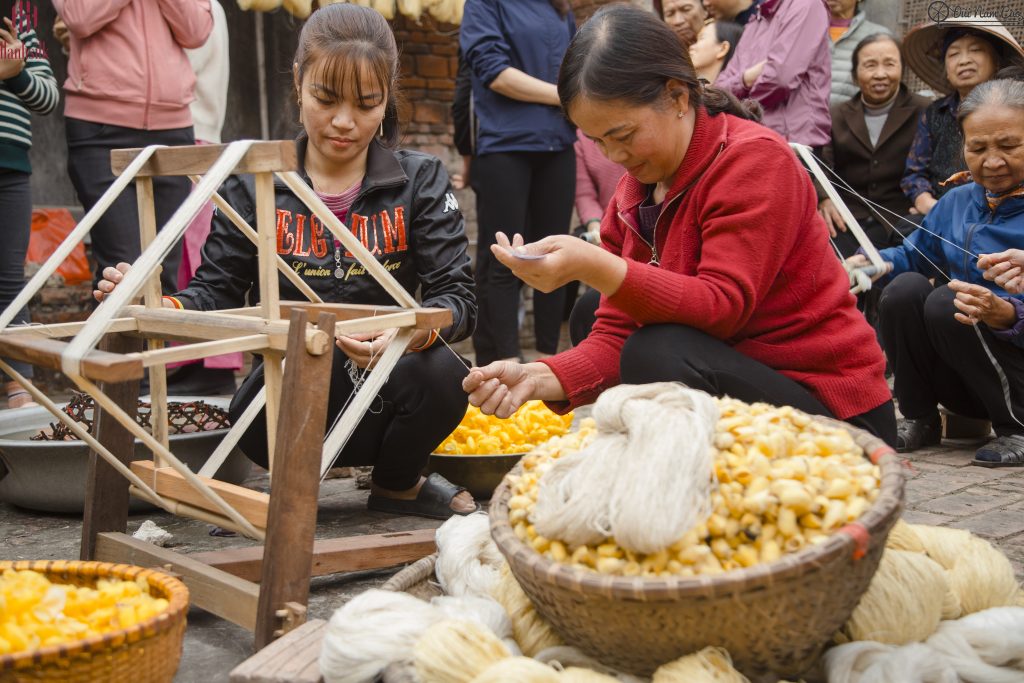
Silk fibers obtained from silkworm cocoons consist of the following three layers:
1. Nái silk is the first silk thread spun from the silkworm cocoon. This is the outermost layer of silk thread, the first to be spun by the silkworm, so the thread is usually thicker and more abundant.
2. Silk thread is the main fiber extracted from the center of the silkworm cocoon after the female silk layer has been removed. This is the highest quality fiber from the silkworm cocoon.
3. Oak fiber is the final silk thread extracted from the silkworm cocoon, after all the main silk thread has been removed. This is the innermost layer of fiber in the cocoon, and it may be in the form of a thick, powdery fiber.
The artisan of the silk weaving village Nam Cao silk Traditionally, silk is spun by boiling cocoons in hot water and then spinning the threads in cold water. The resulting dupioni silk is a combination of these three types of fibers; that is, artisans use techniques to spin silk, satin, and oak fibers simultaneously, twisting them together to create a strong, glossy, and porous dupioni silk structure. The more meticulous and skillful the craftsmanship, the more uniform and long the dupioni silk threads will be, and the higher their value.
Spinning silk may seem simple, but in reality, it requires far more effort and is much more difficult than silkworm breeding. The weavers must immerse their hands in water all day long, whether in summer or winter. In summer, their hands often become irritated by the water, requiring them to rub alum or use water infused with fig leaves to soothe the irritation. In winter, their hands become numb with cold, requiring constant addition of hot water to keep them warm. To create a perfect silk thread, the weavers need not only skill but also to infuse each thread with artistic soul.
Ms. Nguyen Thi Bon, artisan at the Silk Cooperative Nam Cao silkShe shared: “Spinning silk looks simple, but it's actually incredibly hard work. Whether it's summer or winter, my hands have to be soaked in water, and sitting for long periods causes back pain and leg fatigue. Each day I only spin about 0.7 ounces of silk, equivalent to about 40,000 VND, but because I love the craft, I've never thought about giving it up. I've learned this trade since I was a child. Weaving silk is very elaborate; from harvesting the cocoons to completing the silk yarn, it goes through many stages. But once finished, it's difficult to sell and compete with industrial products, so many people have had to abandon the craft…”

Ms. Nguyen Thi Nhuan also said: “Now our main job is spinning yarn. Even though I'm old and weak, I spin every day, my hands pulling and twisting the yarn. I've gotten used to it, and the yarn comes out steadily. In the old days, our ancestors grew mulberry trees and raised silkworms for raw materials; the whole village did this job. Each house had several tubs of cocoons every day, many families had 4-5 looms, earning an income equivalent to a hundred kilograms of rice per day. As soon as you arrived at the beginning of the village, you could hear the clicking sound of the shuttles. The whole village followed each other through the stages of the process, and gradually the weaving industry flourished, causing mulberry cultivation and silkworm farming to decline. Now we have to buy raw materials from elsewhere.”
Dupioni silk is a blend of three types of silk: mulberry, mulberry, and oak. After being spun, it undergoes many processes such as yarn spinning, winding, bobbin winding, loom setting, loom assembly, weaving, dyeing, etc. The resulting dupioni silk fabric is entirely handcrafted, meaning it undergoes no chemical treatment, unlike other industrial methods.
Today, the Silk Cooperative Nam Cao silk We're developing a strategy to win over customers with genuine and high-quality products. Raw, rustic fabrics will be transported to Hanoi for exquisite processing into ao dai (traditional Vietnamese dresses), handkerchiefs, clothing, accessories, home furnishings such as embroidered silk blankets, sheets, and pillows, and especially the 100% line of natural silk face towels and bath towels… and beyond. Nam Cao silk Continue on the plane to the West.


 English
  Vietnamese